
A lot of labor market stuff has been revised since the last post. Most importantly the household survey employment was raised by 2.2 million, the same as the labor force, meaning CPS under counted number of people employed substantially in 2024. Adjusted for the population control, BLS says unemployment rate would have been lower by 20 basis points and a number of people unemployed would decline by 142k.
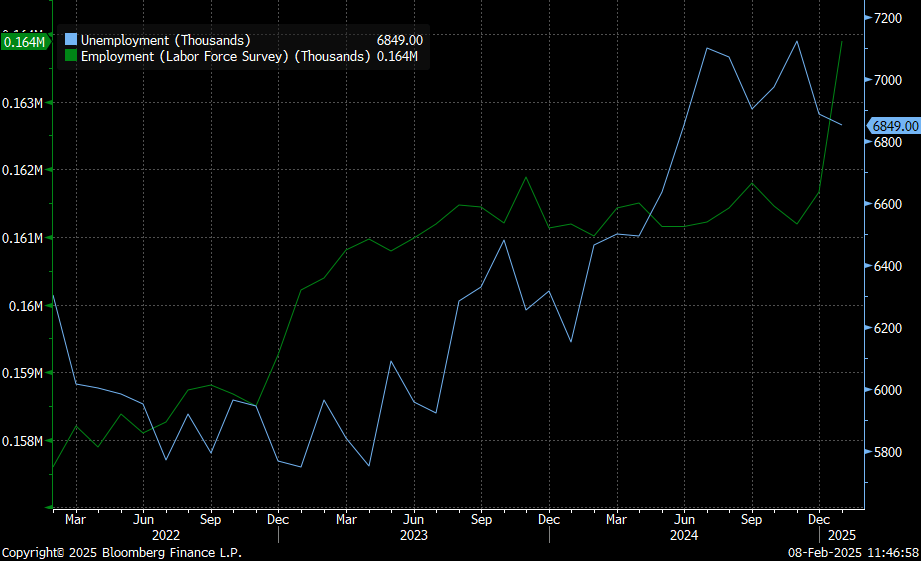
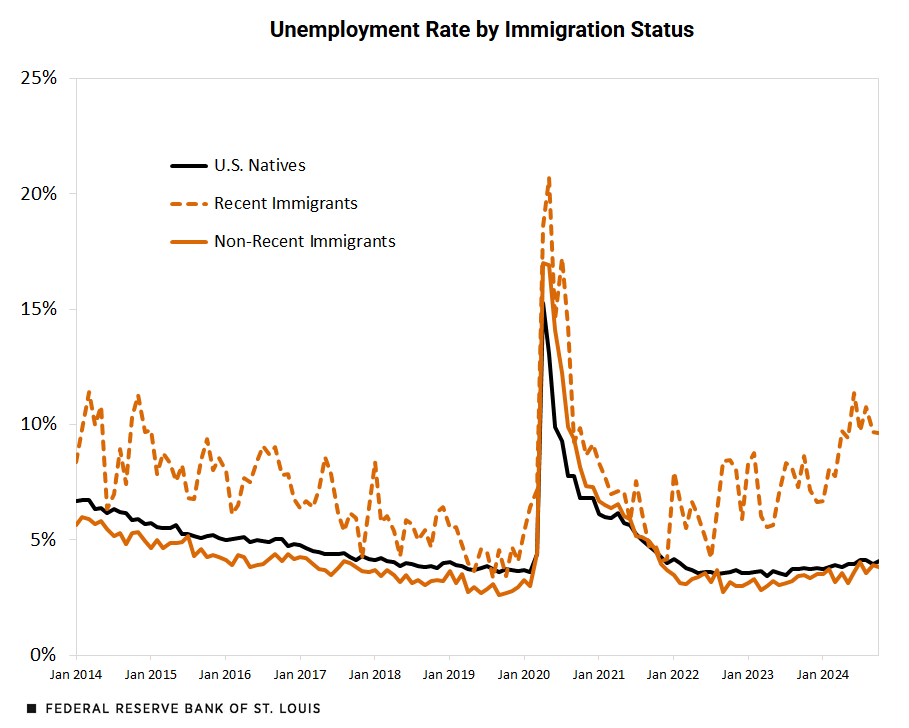
The population control effect implies unaccounted workers sample has only marginally higher unemployment rate than entire population, which can be too optimistic. In fact, recent immigrants have much higher (around 10%) and faster rising unemployment rate than local population, according to St Louis Fed.
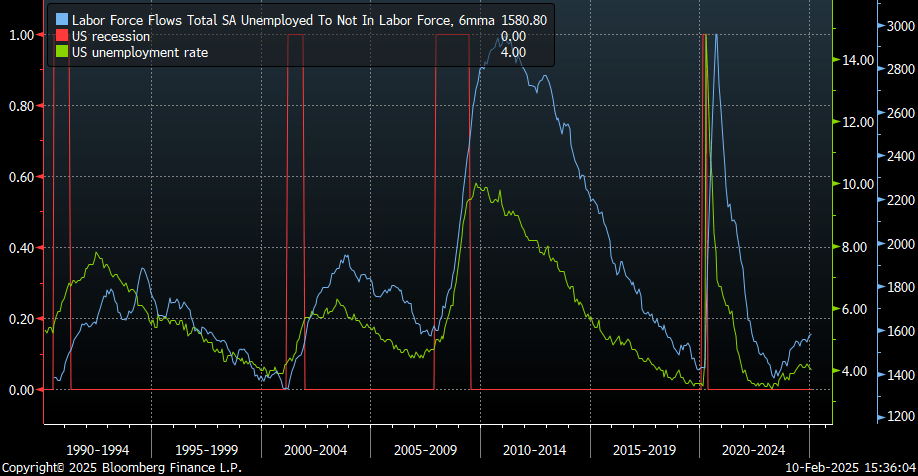
At the same time, flows into employment stay weak for people who are out of the labor force.

Unemployed people are more likely to leave the labor force as well. The trend has been consistent with rising unemployment rate in the past, with an exception of the 1993-1995 period.
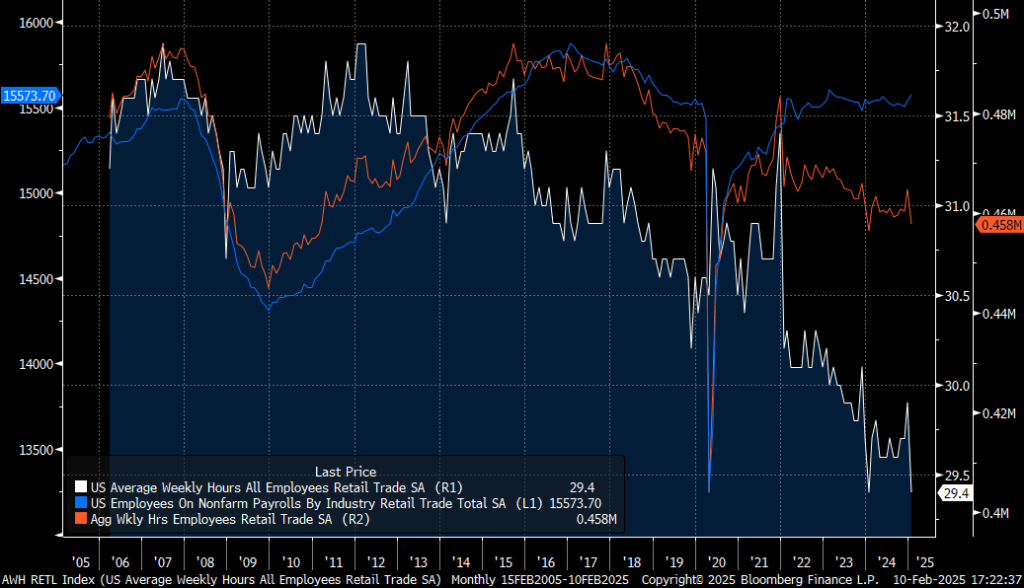
Moving to establishment survey details, private NFP less healthcare increased by 45k in January. Retail employment again was unusually strong, and didn’t reverse as expected, adding 34k of jobs. But tariffs front running is still probably the main driver of the growth.

Moreover, while retail NFP was strong, working hours in retail dropped to the previous all time low. Aggregate working hours are trending down too. And the sector employment should be converging lower in the future.
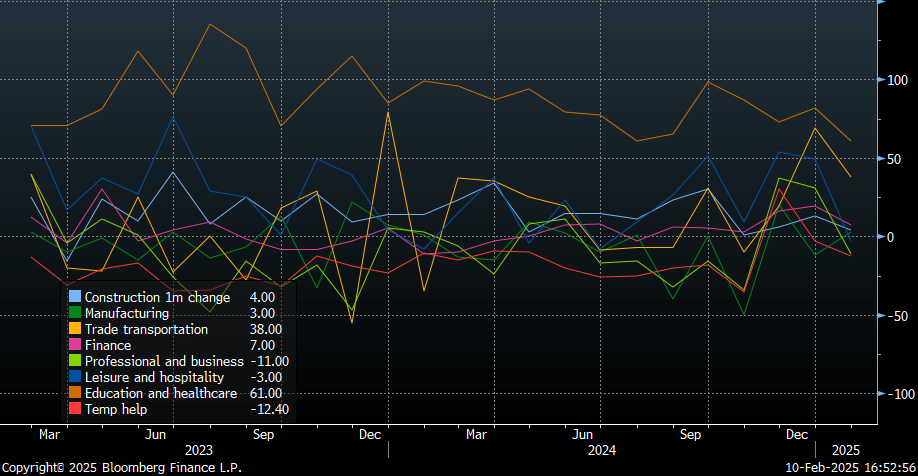
Overall NFP employment breadth deteriorated in January, with all categories but manufacturing posting worse month-over-month growth. November-December bounce could still be related to post-election hiring backlogs.
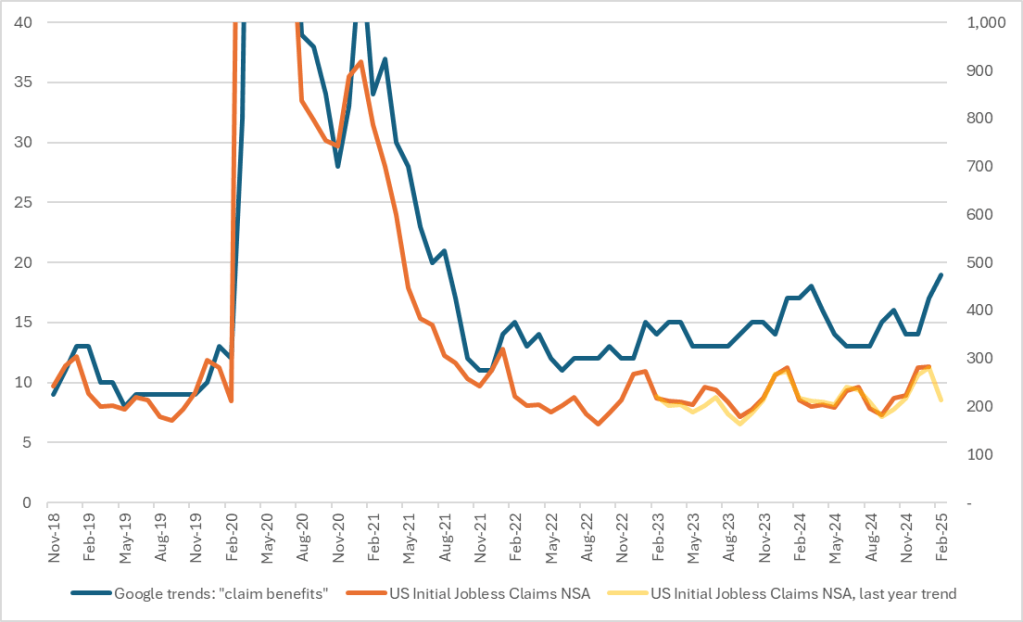
Federal spending freeze is already having an effect on contractors. Unemployment claims will have to start rising again. Some signs are visible in the Google Trends data already.
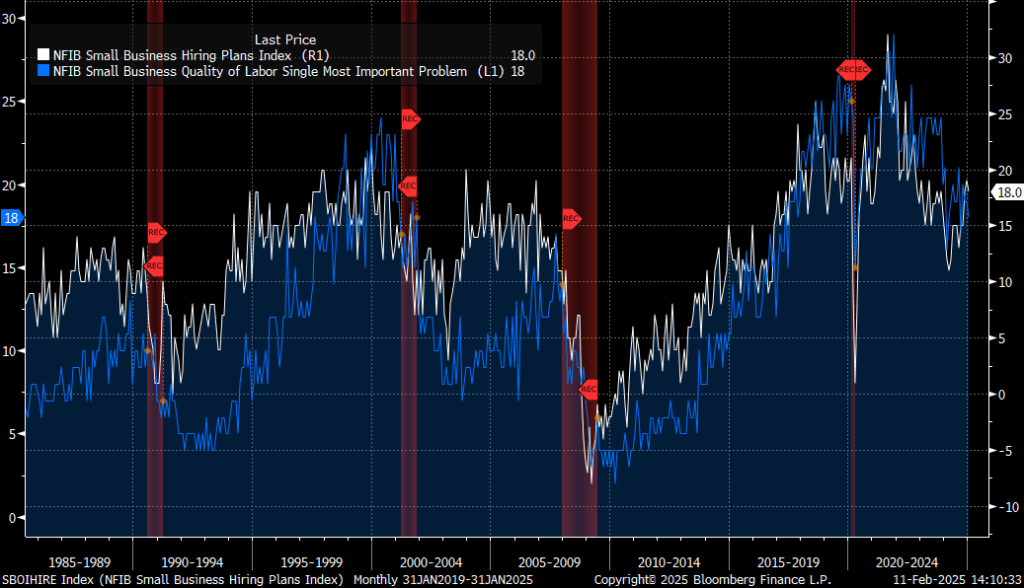
Small businesses continue to cut labor demand. All in all things are setting up for a bottom in the unemployment rate.


Leave a reply to US economic momentum softens, new data rolls off quickly – MacroKid: Your Global Macro and Finance Blog Cancel reply